
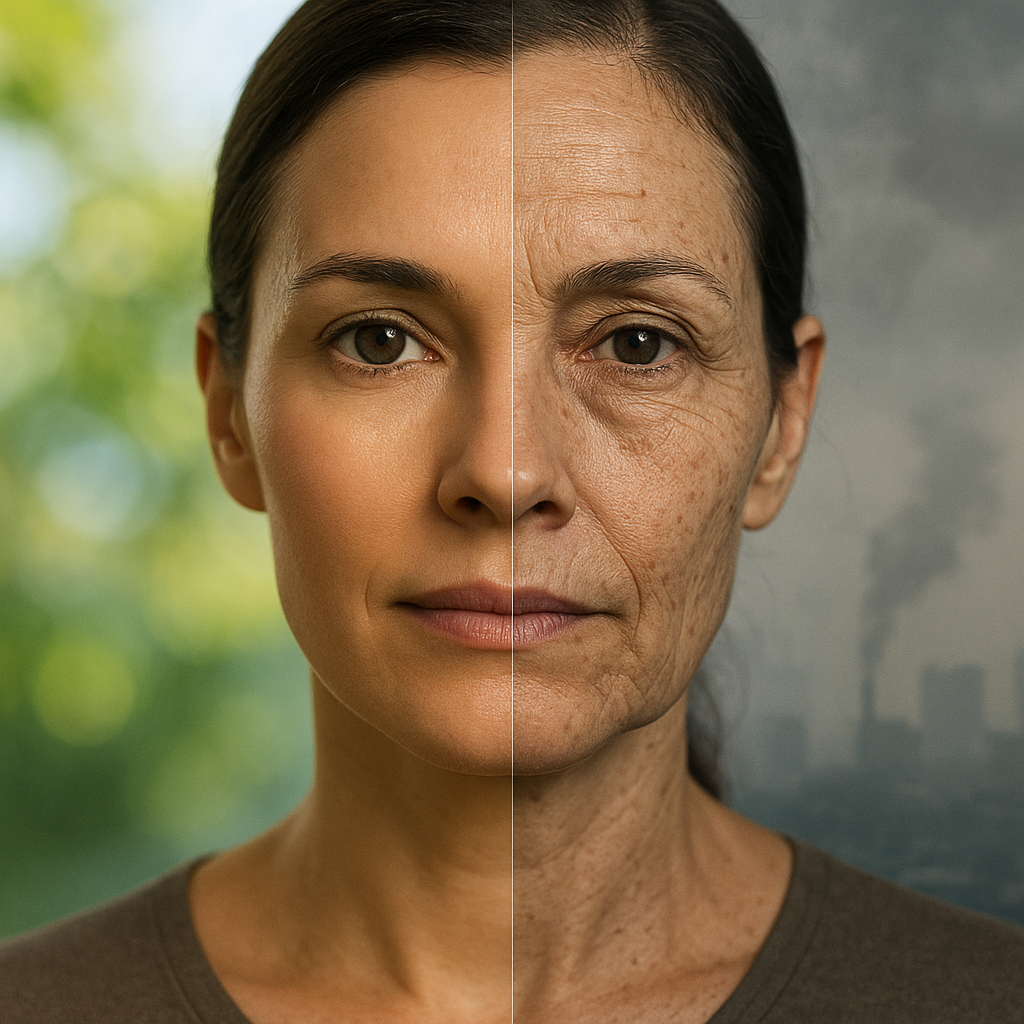

Every morning, millions of people step outside into a world that’s quietly working against their skin. The exhaust fumes from passing cars, the invisible particles drifting from factory chimneys, the ground-level ozone sitting heavy in city air — none of it feels particularly dangerous in the moment. But over time, environmental pollution is one of the most underestimated forces accelerating skin ageing, and science is only beginning to reveal just how deep that damage goes.
This isn’t about the occasional bad air day in a busy city. Pollution-related skin damage is a chronic, cumulative process that affects people in urban and rural areas alike. If you’ve ever wondered why your skin looks duller, feels more sensitive, or seems to be ageing faster than expected, environmental pollution may well be a significant contributing factor.
What Environmental Pollution Actually Does to Your Skin
To understand how pollution ages the skin, it helps to understand what pollution actually is. The term covers a wide range of harmful substances, including:
- Particulate matter (PM2.5 and PM10) — tiny particles from vehicle emissions, industrial activity, and construction
- Polycyclic aromatic hydrocarbons (PAHs) — chemical compounds released by burning fossil fuels
- Ground-level ozone — formed when sunlight reacts with nitrogen oxides and volatile organic compounds
- Heavy metals — including lead, cadmium, and arsenic, found in industrial emissions
- Cigarette smoke — a direct source of over 4,000 toxic chemicals that affect the skin
When these substances make contact with the skin, they don’t simply sit on the surface. Fine particulate matter, particularly PM2.5, is small enough to penetrate the skin barrier and enter deeper layers of the dermis. Once inside, these particles trigger a cascade of biological responses that directly contribute to premature ageing.
Free Radicals and Oxidative Stress
The primary mechanism through which pollution damages skin is oxidative stress. Pollutants are powerful generators of free radicals — unstable molecules that attack healthy cells and proteins in the skin. When free radicals outnumber the skin’s antioxidant defences, they cause widespread cellular damage.
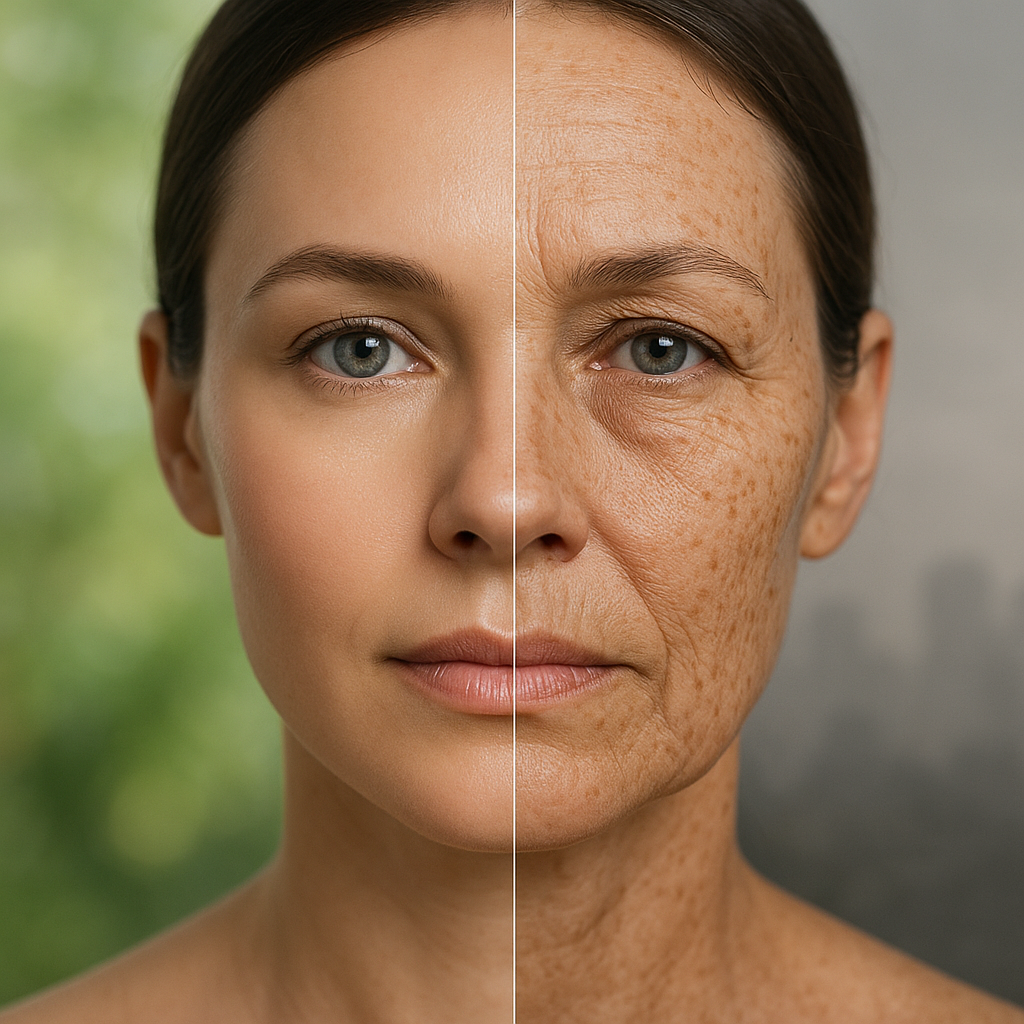
This oxidative damage breaks down collagen and elastin, the structural proteins that keep skin firm, plump, and elastic. Once these proteins degrade, the skin loses its resilience and fine lines, wrinkles, and sagging become far more pronounced. Research published in scientific literature has shown that long-term exposure to particulate matter is significantly associated with increased signs of facial ageing, including more pronounced nasolabial folds and spots.
Inflammation: The Hidden Ageing Engine
Pollution doesn’t just cause oxidative stress — it also triggers chronic low-grade inflammation in the skin. This process, sometimes called inflammageing, is increasingly recognised as one of the central drivers of biological ageing at the cellular level.
When pollutants interact with receptors in skin cells (particularly the aryl hydrocarbon receptor, or AhR), they activate inflammatory pathways that disrupt normal skin function. Over time, this persistent inflammation accelerates cellular senescence — a state in which cells stop dividing and functioning properly but remain in the skin, releasing harmful signals that damage surrounding tissue. Studies have found a clear link between air pollution exposure and increased markers of cellular senescence in skin.
The Biggest Causes of Skin Ageing: Where Pollution Fits In
When people ask what the biggest cause of skin ageing is, UV radiation from the sun is rightly mentioned first. Photoageing — the premature ageing caused by sun exposure — accounts for roughly 80% of visible facial ageing, according to dermatological research. But pollution is increasingly acknowledged as the second major environmental culprit, and crucially, the two often work together.
Ozone and UV radiation have a synergistic effect on the skin. Ozone depletes the skin’s natural antioxidant defences, making it more vulnerable to UV damage. Meanwhile, UV radiation can activate some of the same inflammatory pathways that pollutants trigger. Living in a polluted environment while also experiencing regular sun exposure compounds the ageing effect significantly.
To directly answer the question of whether avoiding the sun helps skin look younger — yes, significantly so. Sun avoidance and daily SPF use are among the most evidence-backed strategies for maintaining youthful skin. But in highly polluted environments, sun protection alone isn’t sufficient. Addressing pollution exposure is equally important.
Environmental Factors That Cause Skin Ageing: Beyond Air Pollution
Air pollution is the most widely studied environmental factor in skin ageing research, but it’s far from the only one. A comprehensive picture of environmental skin ageing includes:
Climate and Weather Extremes
Extreme temperatures — both heat and cold — stress the skin barrier and accelerate moisture loss. Climate change is intensifying these weather patterns, increasing the frequency of heatwaves, and altering humidity levels in ways that have direct consequences for skin health. A drier environment accelerates transepidermal water loss, weakening the barrier and making the skin more permeable to pollutants.
Blue Light from Screens
High-energy visible (HEV) light, emitted by smartphones, laptops, and LED lighting, has been linked in some studies to free radical generation and hyperpigmentation. While research in this area is still developing, the sheer volume of screen exposure in modern life makes it a relevant environmental consideration for skin ageing.
Indoor Air Pollution
Many people assume that being indoors protects them from pollution, but indoor air can actually be more polluted than outdoor air in some contexts. Cooking fumes, cleaning products, synthetic furnishings, and poor ventilation all contribute to indoor pollutant levels. Volatile organic compounds (VOCs) from paint, carpets, and household products are a particular concern.
How Pollution Affects Specific Skin Concerns
The impact of pollution on the skin isn’t limited to accelerated ageing. It’s also directly associated with a range of visible skin concerns that many people struggle with:
- Hyperpigmentation and dark spots: Pollutants, particularly PAHs, activate melanin production pathways, leading to uneven skin tone and age spots.
- Dullness and uneven texture: The accumulation of particulate matter on the skin’s surface, combined with oxidative damage to the outer layers, leaves skin looking flat and lacklustre.
- Sensitivity and redness: Chronic inflammatory responses triggered by pollutants can manifest as increased skin sensitivity, redness, and a compromised barrier function.
- Acne and breakouts: Pollution can clog pores and disrupt the skin microbiome, potentially contributing to breakouts in susceptible individuals.
- Eczema and psoriasis flares: People with pre-existing skin conditions often find that pollution exposure worsens their symptoms.
How to Protect Your Skin from Air Pollution
The good news is that there are practical, evidence-informed strategies for defending the skin against pollution-related damage. None of them can eliminate exposure entirely, but together they significantly reduce the impact.
Prioritise a Robust Cleansing Routine
Removing pollutants from the skin’s surface at the end of each day is one of the most effective steps anyone can take. Oil-based cleansers or micellar waters are particularly effective at dissolving and lifting particulate matter, PAHs, and other surface pollutants that water alone can’t remove. Double cleansing — using an oil-based cleanser followed by a water-based one — is a popular approach that ensures a thorough clean without over-stripping the skin barrier.
Load Up on Antioxidants
Since oxidative stress is the primary mechanism of pollution-related skin damage, topical antioxidants are a powerful line of defence. Look for skincare products containing:
- Vitamin C — one of the most well-researched antioxidants for skin, effective against both UV and pollution-induced oxidative stress
- Vitamin E — works synergistically with Vitamin C and is particularly effective in a combination formula
- Niacinamide — supports the skin barrier, reduces inflammation, and helps with pigmentation
- Resveratrol — a polyphenol with potent antioxidant and anti-inflammatory properties
- Ferulic acid — often paired with Vitamins C and E to enhance their stability and efficacy
Dietary antioxidants matter too. A diet rich in colourful vegetables, berries, green tea, and omega-3 fatty acids supports the skin’s internal antioxidant systems and helps counteract pollution-induced free radical damage from within.
Never Skip SPF
Given the synergistic relationship between UV radiation and pollution, daily broad-spectrum SPF is non-negotiable. SPF 30 or above applied every morning — regardless of weather — reduces the compounded ageing effect of sun and pollution exposure. Some newer sunscreen formulations also include antioxidants specifically designed to address pollution damage.

Strengthen the Skin Barrier
A healthy, intact skin barrier is the first line of physical defence against pollutants. Supporting it with ceramides, fatty acids, and barrier-repair ingredients reduces the permeability of the skin to fine particles. Avoiding harsh, stripping cleansers and over-exfoliation is equally important — a compromised barrier lets more pollution in.
Consider Your Environment
Practical environmental adjustments can also make a meaningful difference. Using an air purifier indoors, particularly in city homes, reduces exposure to indoor pollutants. Keeping windows closed during high-pollution periods (many cities now publish daily air quality indexes) and choosing walking routes away from heavy traffic are small changes that add up over years of exposure.
The Long-Term Picture: Pollution and Cellular Ageing
Perhaps the most significant finding in recent pollution-skin research is the link between pollution exposure and cellular senescence. As mentioned earlier, senescent cells — sometimes called “zombie cells” — accumulate in ageing skin and release inflammatory signals that damage surrounding healthy tissue. What’s particularly striking is that pollution appears to accelerate this process, pushing skin cells into senescence earlier than they would otherwise reach it.
This means that the effects of pollution on skin aren’t just cosmetic. They reflect genuine biological ageing at the cellular level. For researchers, this has opened up new avenues in anti-ageing science, with growing interest in senolytic ingredients — compounds that may help clear senescent cells from skin tissue.
The relationship between pollution, inflammation, and cellular senescence also helps explain why people living in heavily polluted urban environments often show more advanced signs of skin ageing than those in cleaner air environments, even when other lifestyle factors are controlled for. This has been borne out in epidemiological studies comparing skin ageing across different cities and pollution levels.
Conclusion
Environmental pollution is a genuinely significant driver of premature skin ageing — one that works through multiple biological pathways, from oxidative stress and chronic inflammation to cellular senescence and collagen degradation. While UV exposure remains the most powerful environmental ageing factor, pollution compounds and accelerates that damage in ways that are increasingly well understood by skin researchers.
The key takeaways are clear: consistent cleansing to remove daily pollutant build-up, topical and dietary antioxidants to neutralise free radical damage, daily SPF to prevent the synergistic UV-pollution effect, and barrier-supporting skincare to keep pollutants from penetrating deeply. Reducing exposure where possible — through air purifiers, air quality awareness, and thoughtful route planning — adds an additional layer of protection.
Understanding how pollution affects the skin is the first step toward making more informed, protective choices. The environment we live in is something we can rarely fully control, but the way we respond to it — in our skincare habits, our diet, and our daily decisions — makes a measurable difference to how our skin ages over time.
